You know, in the world of global procurement, Sport Event Medals aren't just about giving out awards—they actually carry a lot more weight. These medals kinda symbolize excellence and dedication, and honestly, they attract a lot of attention from brands and sponsors who really wanna be associated with glory. I came across a report from the International Association of Athletics Federations that says big sporting events can rake in up to $2 billion just from merchandise sales—that’s pretty huge! It really shows how much potential there is in the market for medals and all that related gear.
So, companies jump into this lively market because, let’s be honest, the charm of Sport Event Medals is hard to ignore. They’re looking for partnerships that help boost their visibility and build credibility. Plus, according to the Global Sports Market Report, the sports industry could hit a staggering $614 billion by 2025. That’s a goldmine for businesses wanting to connect with real sporting achievements, even though navigating the procurement process can be pretty complex.
That said, getting your hands on Sport Event Medals isn’t always smooth sailing. There are big issues like making sure sourcing is sustainable and ethical—which is something everyone’s paying more attention to these days. Relying heavily on a few suppliers can also be risky. So, stakeholders really need to stay on top of trends, making sure their procurement strategies match what consumers now care about —values and ethics, for example. Honestly, the importance of these medals in the global market isn’t just about celebrating victories. They also play a key role in driving economic growth and encouraging companies to act responsibly.

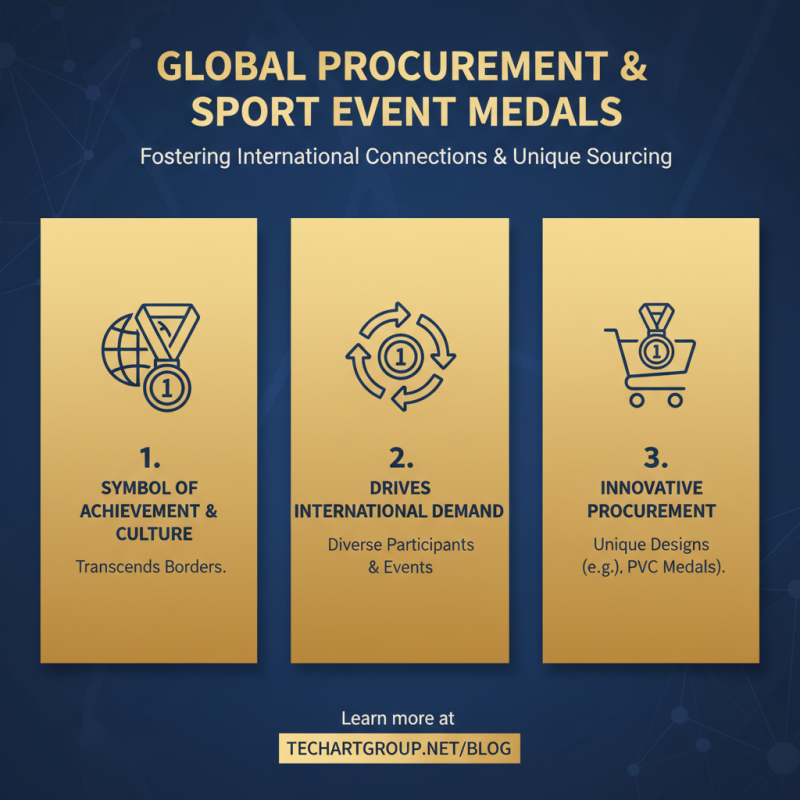
Sport event medals, like the PVC Event Medal, play a significant role in global procurement. They are not just awards; they represent achievements and foster international connections. Global events attract diverse participants. Each medal carries cultural significance that transcends borders. This symbolism drives demand for unique procurement practices.
Medals can also influence consumer behavior. The pride associated with earning a medal often translates into increased interest in sporting goods. This creates opportunities for manufacturers and suppliers involved in medal production. They must adapt to various needs, from materials to design. The challenge lies in balancing quality and cost-effectiveness.
Furthermore, the transition to sustainable practices is crucial. Suppliers face pressure to use eco-friendly materials while maintaining medal integrity. The market is shifting toward eco-conscious production, reflecting broader trends in global procurement. However, achieving these standards consistently remains elusive. This affects both companies and consumers, reminding us of the complexities involved in the procurement process.
Major sporting events hold immense economic significance for local and global markets. Cities invest significant resources to host these events. They hope to attract tourists, boost local businesses, and enhance their global reputation. The influx of visitors can lead to increased spending in hotels, restaurants, and shops.
However, the benefits are not always guaranteed. Some cities face backlash over rising costs and gentrification. The promise of economic growth can fall short. Local communities may see limited gains. Events can create temporary jobs, but they often disappear afterward.
This mixed impact raises questions about sustainability. It highlights the need for careful planning and consideration. Authorities must weigh the potential benefits against the challenges. A deeper analysis of economic models is necessary. This ensures that the legacy of major sporting events is genuinely beneficial for all.
This chart highlights the economic value generated by major sporting events through tourism, sponsorships, and media rights, measured in billions of dollars.
The production of sport Medals involves complex supply chain dynamics. Sourcing materials like metals and textiles requires careful planning. Suppliers must adhere to strict quality standards. This process often reveals inefficiencies that challenge creators. Medals must not only be durable but also visually appealing. Manufacturers are constantly seeking better sources and methods.
Consider the transportation aspect. Shipping medals from factories to event sites requires coordination. Delays can lead to significant problems. Events demand timely deliveries. If medals arrive late, it disrupts ceremonies and diminishes the athlete's moment. Such scenarios highlight the need for reliable logistics.
Sustainability also plays a vital role in sport medal production. Manufacturers are exploring eco-friendly materials. However, finding the right balance between cost and sustainability can be difficult. The challenge of ensuring ethical sourcing is ever-present. Each medal embodies not just a win, but a journey through a complicated supply chain. Reflecting on these issues can lead to improvements in future productions.
Sustainability in manufacturing sport event medals is becoming essential. Many events now prioritize eco-friendly practices. The production of medals, such as those for a Pickleball Tournament, can have significant environmental impacts.
Using recycled materials and sustainable processes is a growing trend in the industry.
The challenge lies in balancing quality with sustainability. Athletes expect high-quality medals that reflect their achievements. Yet, this can lead to using non-sustainable materials. More manufacturers are exploring alternatives, like bioplastics and metals sourced responsibly. The ongoing shift towards sustainable practices requires constant evaluation and adaptation.
Engaging local artisans can enhance sustainability too. By sourcing materials and labor locally, events reduce carbon footprints. However, the supply chain can be complex, leading to potential setbacks. Transparency in the sourcing process is crucial for building trust with participants. Sustainable practices not only benefit the environment but also inspire future generations of athletes.
Sport medals hold immense cultural significance that transcends borders. They symbolize achievement, dedication, and the spirit of competition. When athletes earn these medals, they reflect the hopes and dreams of nations. In many cultures, these awards are more than mere tokens; they represent national pride and identity. The importance of Special Design Medals adds a layer of uniqueness that often enhances their value. Beautifully crafted designs become a representation of craftsmanship and creativity.
Trade in sport medals, particularly those with special designs, influences local economies. Countries often invest in these events, promoting tourism and local artisanship. Medals created with local materials or unique designs can attract attention and generate interest in the host country. This creates a ripple effect, impacting industries from manufacturing to service sectors. However, challenges remain. The global market for medals can sometimes overshadow local creations, leading to a loss of cultural identity in favor of mass production.
Additionally, the celebration of sporting victories can validate local traditions. Yet, this may also result in commercialization, where the essence of the medal's story is lost. As countries navigate the delicate balance of tradition and commerce, the conversation around the true significance of these medals continues to evolve.
The significance of sport event medals extends beyond mere recognition. Medals represent the culmination of years of training, commitment, and excellence. For global procurement officials, the procurement of these medals involves strategic planning and execution. According to a report by the Global Sports Federation, more than 75% of major sporting events observe a significant increase in procurement complexity due to the unique design and material requirements for medals.
Successful procurement strategies for major sporting events include collaborative partnerships with local artisans. These artisans often add cultural and artistic value to the medals. A case in point is the Olympic Games, where custom designs reflect the host nation's identity. Procurement teams must also consider the lifecycle of the medals. The International Olympic Committee highlights that 90% of the materials used for medals should be sourced sustainably, reflecting a growing shift towards eco-friendly initiatives.
Challenges remain. The procurement process can become mired in bureaucratic red tape, leading to delays. An estimated 30% of procurement initiatives do not meet initial timelines, which highlights the need for adaptive strategies. Continuous improvement and feedback mechanisms could foster timely deliveries while ensuring that medals uphold their symbolic value. Developing a responsive supply chain is crucial for achieving procurement goals, and all parties should remain open to learning from past experiences.
The evolution of sport event medals reflects broader changes in global procurement strategies. Medals symbolize achievement, fostering a sense of pride and unity among athletes and nations. As the demand for sustainable practices grows, the materials used for these awards are shifting. More organizers seek eco-friendly alternatives, incorporating recycled metals and sustainable options. This shift can complicate logistics and sourcing strategies, requiring suppliers to adapt.
Future trends suggest a move towards personalization. Unique designs or local craftsmanship can create a stronger connection to the event's location. However, this raises concerns about consistency in quality and production timelines. Balancing personalization with the need for efficiency is essential, yet not all regions have the same capabilities. Global suppliers may face challenges in meeting diverse demands while maintaining ethical sourcing.
Moreover, technology plays a pivotal role in the procurement process. The use of blockchain could enhance transparency and traceability. This invites a reconsideration of partnerships and trust among suppliers. Yet, not all stakeholders are familiar with these technologies. Ensuring all participants understand the implications is crucial. As sports continue to connect the world, the procurement of event medals must reflect these complexities. Adaptation will be key in navigating future challenges.
: Producing sport medals involves sourcing materials, ensuring quality, and managing supplier relationships.
Transportation needs careful coordination. Late arrivals disrupt ceremonies and affect athlete experiences.
Sustainability ensures eco-friendly practices but balancing cost and ethical sourcing remains a challenge.
Medals symbolize achievement and national pride, reflecting hopes and dreams of nations.
Collaborating with local artisans adds cultural value. Unique designs promote tourism and local economies.
Procurement can be complex due to unique designs, materials, and bureaucratic delays.
Bureaucratic hurdles often complicate processes, leading to missed deadlines for production.
Continuous improvement and learning from past experiences can enhance timelines and maintain symbolic value.
Special design medals enhance uniqueness and craftsmanship, making them more valuable and meaningful.
Countries face challenges in preserving cultural identity while promoting medal commerce and public interest.
Sport Event Medals play a critical role in promoting global procurement trends, serving as symbols of excellence that transcend cultural boundaries. The production of these medals involves complex supply chain dynamics, highlighting the economic impact of major sporting events on both local and global markets. Sustainability practices in medal manufacturing have become increasingly important, as stakeholders seek to minimize environmental footprints while ensuring quality and integrity in the procurement process.
Additionally, the cultural significance of Sport Event Medals influences international trade, as countries often showcase their achievements through these awards. Case studies reveal successful procurement strategies employed during significant sports events, underscoring the necessity for effective planning and collaboration. Looking ahead, future trends in Sport Event Medals are expected to evolve, reflecting changes in consumer preferences and sustainability goals, further shaping their role in global procurement.